Published: May 23, 2026 | Reading Time: 8 minutes
Comparing the Marimba, Xylophone, Vibraphone, and Glockenspiel
To the untrained eye, the large instruments at the back of the orchestra that look like giant wooden or metal pianos all seem the same. They belong to a sub-category of pitched percussion known as mallet percussion or keyboard percussion. However, to a musician, there are massive differences in their construction, material, sound, and the techniques used to play them.
The Great Alphabet Lie: "X is for Xylophone"
If you look at almost any children's alphabet book, flashcard, or toy, "X is for Xylophone" features a colourful toy with rainbow-coloured metal bars that you strike with a plastic wand. However, this is factually incorrect!
The prefix "xylo-" comes from the Ancient Greek word for wood. A true xylophone MUST have wooden bars. That colourful metal toy in the children's book? It is actually a metallophone, specifically a toy glockenspiel. So, the book should really say "G is for Glockenspiel"—but unfortunately for accuracy, authors desperately needed a common word that starts with X!
The Four-Mallet Grip
A fascinating aspect of mallet percussion is how performers manage to play chords. A pianist has ten fingers, but a percussionist only has two hands. To play complex harmony, advanced marimba and vibraphone players learn to hold four mallets at once (two in each hand).
There are different schools of thought on how to hold them, notably the Stevens Grip (where mallets are held independently between fingers for maximum stretch) and the Burton Grip (cross-grip favored in jazz, popularized by Gary Burton). Watching a virtuoso independently control the spread of four mallets during a blistering solo is truly a sight to behold.
The Wooden Instruments (Xylophones)
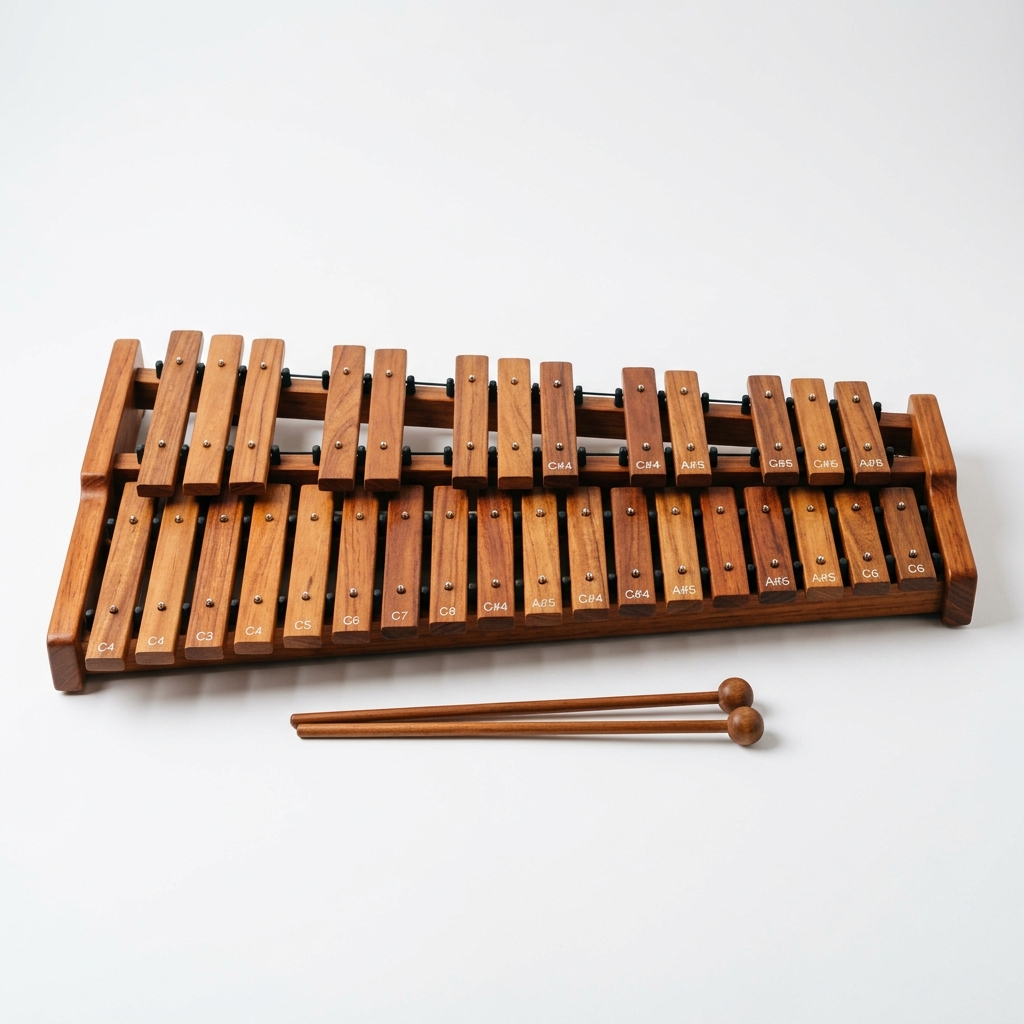
Xylophone
Material: Wooden bars (traditionally rosewood or padauk, sometimes synthetic materials like Kelon for durability in marching bands).
Sound/Tone: Bright, sharp, and very crisp. The sound decays (fades away) quickly.
Design: The bars are relatively thick and narrow. The acoustic resonator tubes underneath are smaller compared to the marimba.
Role & Culture: Often used for fast, piercing melodies that need to cut through a large orchestra (like the skeleton dance in Saint-Saëns' Danse Macabre). It also has deep roots in African and Latin American traditional music.
Open Virtual Xylophone →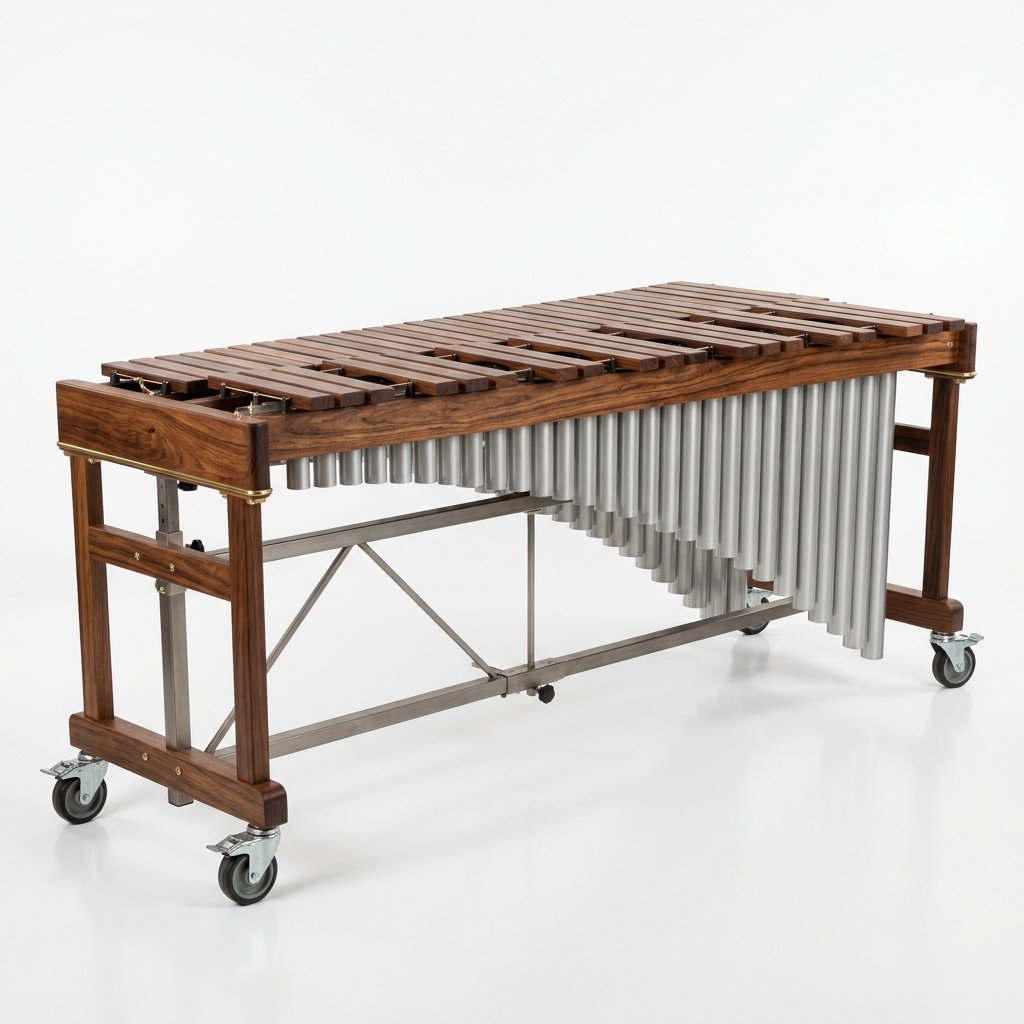
Marimba
Material: Wooden bars (Honduran rosewood is the gold standard for high-quality instruments).
Sound/Tone: Deep, warm, rich, and incredibly mellow. The sound is much more resonant and lower-pitched than the xylophone.
Design: The marimba is massive—a full 5-octave concert marimba is over 8 feet long! It has wider, thinner bars and very long metal resonator tubes extending all the way down to the floor to amplify the low frequencies.
Role in Pop Culture: Highly popular as a solo instrument due to its beautiful tone. You have definitely heard the marimba before: it is the primary instrument used in the iconic default iPhone ringtone, and features heavily in tropical pop hits like Ed Sheeran's "Shape of You."
Open Virtual Marimba →The Metal Instruments (Metallophones)
Vibraphone (or "Vibes")
Material: Metal bars (usually an aluminum alloy).
Sound/Tone: Mellow, ringing, smooth, and jazzy. It features a unique, sci-fi-esque vibrato effect.
Design: The vibraphone is a feat of engineering with two unique features: a sustain pedal (exactly like a piano damper pedal) to let the notes ring out or choke them, and a small electric motor that spins metal discs (fans) inside the resonator tubes, opening and closing them rapidly to create its signature pulsating vibrato sound.
Role: Very prominent in jazz music (think Lionel Hampton or Milt Jackson), but also frequently used in modern lo-fi hip hop and film scores for its dreamy, ethereal quality.
Glockenspiel (Orchestral Bells)
Material: Heavy metal bars (usually steel).
Sound/Tone: Extremely high, bright, piercing, and sparkling.
Design: It is the smallest of the mallet instruments, often built into a portable case, and usually lacks resonator tubes entirely. It sits on a stand or table. The notes ring out for a very long time since there are no dampeners.
Role: Used for adding magical, twinkling highlights to music (often associated with fairy dust or snow in film scores). It's also iconic in indie rock, prominently featured in Bruce Springsteen's "Born to Run" and Radiohead's "No Surprises".
Open Virtual Glockenspiel →Beginner's Guide: Which One Should You Learn On?
If you want to learn mallet percussion, you will likely face a logistical problem: space and cost. A professional marimba costs as much as a used car and takes up half a living room.
Because the layout of the bars is identical across all four instruments (arranged exactly like the white and black keys of a piano), skills are 100% transferable. Most students begin their journey on a Glockenspiel student kit (or a "bell kit"). It is affordable, fits in a backpack, and allows you to learn the scales, reading music, and muscle memory. Alternatively, starting with an electronic MIDI keyboard or a virtual browser-based xylophone is a completely free way to learn the layout before investing in physical hardware.
Summary of Differences
| Instrument | Bar Material | Tone Quality | Special Features |
|---|---|---|---|
| Xylophone | Wood | Bright, crisp, short decay | High pitch, cuts through ensembles |
| Marimba | Wood | Warm, deep, resonant | Huge size, long resonator tubes |
| Vibraphone | Metal (Aluminum) | Mellow, ringing, vibrato | Sustain pedal, motorized spinning fans |
| Glockenspiel | Metal (Steel) | Piercing, high, sparkling | Smallest size, extremely long sustain |
Conclusion
Next time you see a keyboard instrument being struck with mallets, you'll know how to tell them apart like a pro! Look at the bars (wood vs. metal) and look underneath (long tubes, short tubes, or no tubes) to easily distinguish a marimba, xylophone, vibraphone, and glockenspiel. And most importantly, you can now proudly correct every alphabet book you see.